How to use
How to use a red light mask
The question: How often should you use a red light mask?
Two or three times a week, in red mode, eyes closed, for months rather than days. A 2025 sham-controlled trial found two sessions a week did as well as three, and Harvard Health says home devices need regular use for four to six months.
Step by step
Clean, dry skin
No serums under the mask. This is our instruction for the Red Mask.
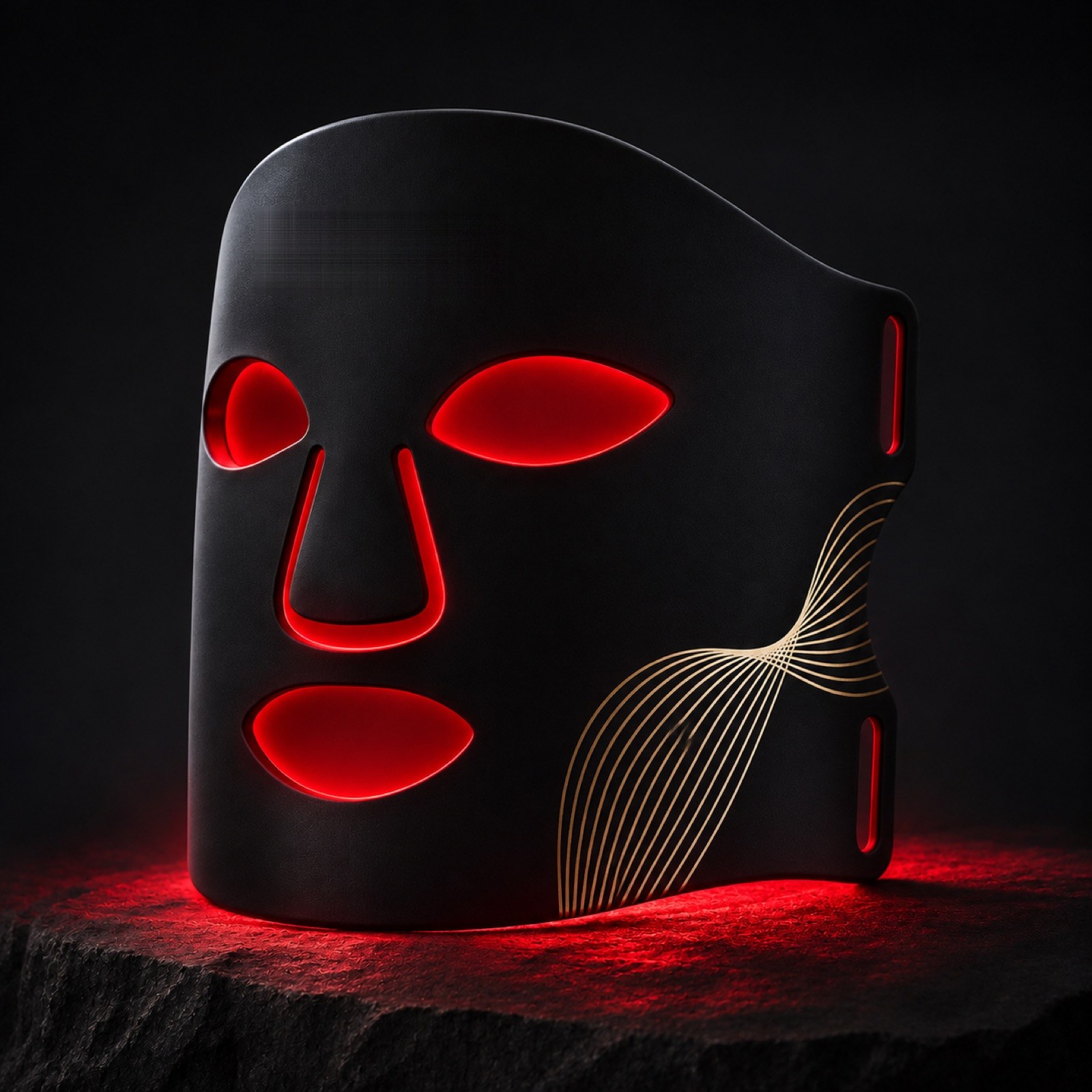
Red mode, 10 minutes
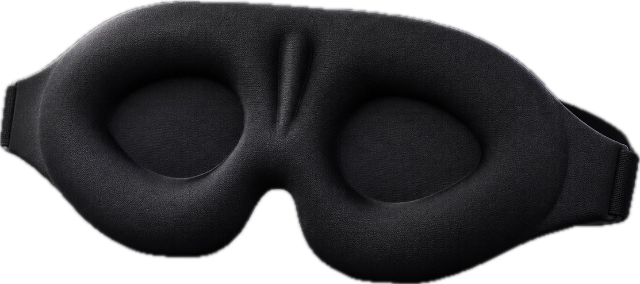
The Red Mask's session is 10 minutes at 630 nm. Trials used different session lengths; one 2025 trial used 21 minutes at a measured 6.4 mW/cm². Our mask's power output isn't stated yet, so we can't say how its dose compares.
Eyes closed, shield on if the directions say so
Cleveland Clinic says to shield your eyes. The AAD says to wear the eye protection the directions recommend and not to swap in sunglasses.
Two or three nights a week
In a 2025 trial of 95 women, two sessions a week gave results similar to three, against a sham mask. A 2014 trial used two sessions a week for 30 sessions.
Judge it in months
Harvard Health says home devices must be used multiple times a week for four to six months. Take a photo in the same light on day 1 and compare at week 8 and beyond.
Common mistakes
- Judging it after a week or two. The trials measured change after weeks to months.
- Using the blue or green modes and expecting the red-light results. The trials we cite for the Red Mask used red light.
- Skipping the dermatologist check if your skin is darker or you take light-sensitive medication. The AAD says darker skin tones are more sensitive to visible light, including red.
- Expecting in-office results. The AAD says the red light dermatologists use is more powerful than at-home devices.
The free version
There is no free way to get the same red light dose. The free part of the routine is the record: a photo in the same light on day 1 and at week 8, so you judge the result yourself.
Talk to a dermatologist first if
The AAD recommends seeing a board-certified dermatologist before using red light at home. Harvard Health says to avoid it if you have a light-sensitive condition such as lupus or take light-sensitive medications such as certain antibiotics, and that people with darker skin should start with lower doses. Cleveland Clinic notes that the long-term safety of red light devices isn't yet known.
What the evidence covers
A 2026 systematic review of 8 at-home LED studies (365 people) found improvements in wrinkles, texture and elasticity, mostly with red and near-infrared light, with mild, short-lived side effects, but called for larger standardised trials. Some studies are run by device makers; one 2026 mask study was authored by employees of the cosmetics company that sells it. We make no treatment claims.
On our shelf
Read next
Method
Red light on skinHow often should you use a red light mask?Reviewed November 17, 2026Study
Red and broad-spectrum light on skin: a 2014 controlled trialDoes red light therapy work for wrinkles?Reviewed November 17, 2026Study
Red and amber light on crow's feet: a 2023 split-face trialDoes red light reduce wrinkles around the eyes?Reviewed November 17, 2026Guide
How to choose a red light maskWhat should you look for in a red light mask?Reviewed November 17, 2026Guide
How to use a light therapy lampWhat time should you use a light therapy lamp, and for how long?Reviewed November 17, 2026Guide
How to use a walking pad at your deskWhat speed should a walking pad be for desk work?Reviewed November 17, 2026Sources
- Bragato et al., Lasers Med Sci 2025: red LED mask, two vs three sessions a week, sham-controlled, 95 women (PubMed abstract)
- Wunsch and Matuschka, Photomed Laser Surg 2014: red and near-infrared light, 136 volunteers (PubMed abstract)
- Harvard Health Publishing: Red light therapy for skin care
- American Academy of Dermatology: Is red light therapy right for your skin?
- Cleveland Clinic: Red light therapy
- Das et al., Aesthetic Plast Surg 2026: systematic review of at-home LED devices for the face, 8 studies (PubMed abstract)
- Bellanger et al., Skin Res Technol 2026: home-use 630/850 nm LED mask plus cream, 50 women, maker-employed authors (PubMed abstract)
Corrections
See something wrong, or a study we read differently than you? Write to hello@outwill.shop. A person checks it, corrects the page and updates the review date. How we grade and review.