Study · Photobiomodulation, Photomedicine, and Laser Surgery, 2023
Red and amber light on crow's feet: a 2023 split-face trial
The question: Does red light reduce wrinkles around the eyes?
In 137 women, ten sessions over four weeks cut measured wrinkle volume around the eyes by 31.6% on the red-light side and 29.9% on the amber side. No side went untreated, so the trial cannot show how much of the change came from the light.
The paper
Mota LR, Duarte IDS, Galache TR, Pretti KMDS, Neto OC, Motta LJ, Horliana ACRT, Silva DFTD, Pavani C (2023). Photobiomodulation Reduces Periocular Wrinkle Volume by 30%: A Randomized Controlled Trial. Photobiomodulation, Photomedicine, and Laser Surgery.
Read it at the source · DOI 10.1089/photob.2022.0114 · PubMed
We read the abstract only, so details that only appear in the full text are not on this page.
Who was studied, and how
- Design
- Randomized split-face trial: each woman had red light on one side of the face and amber light on the other, with the side chosen at random. The published protocol describes it as double-blind and states there is no control or placebo group. Registration REBEC-6YFCBM.
- Participants
- 137 women recruited; the number analysed is not reported in the abstract
- Population
- Women aged 40–65 in São Paulo, Brazil, with skin phototypes II–IV and Glogau photoaging types II–IV.
What the trial used
- Wavelength
- 660 nm red on one side, 590 nm amber on the other
- Dose per session
- 3.8 J/cm²
- Session
- 10 minutes (published protocol)
- Course
- 10 sessions over 4 weeks, 2–3 a week (published protocol)
- Area
- Around the eyes (crow's feet)
- Irradiance
- Not reported in the abstract
What it found
Wrinkle volume around the eyes (VisioFace RD), skin hydration (Corneometer), elasticity (Cutometer) and quality-of-life questionnaires.
- Effect, as reported
- Wrinkle volume fell 31.6% on the red side and 29.9% on the amber side. Hydration and elasticity did not improve. The difference between sides and confidence intervals are not reported in the abstract.
Limitations
- No untreated or sham side, so changes from time, season or repeated measurement cannot be separated from the light.
- Red and amber gave nearly the same result, which does not point to red light specifically.
- A 4-week course measured right after treatment; no later follow-up is reported in the abstract.
- We read the abstract and the published protocol (BMJ Open 2018), not the full results paper.
- The LED device was provided by its maker, Cosmedical, according to the protocol.
Funding and conflicts
The published protocol states no specific grant and no competing interests; the LED device was provided by Cosmedical and the skin-measurement devices by Tecnotests. The 2023 paper's own funding statement: not stated in what we read.
What it does not show
- That red light beats no light. There was no untreated comparison.
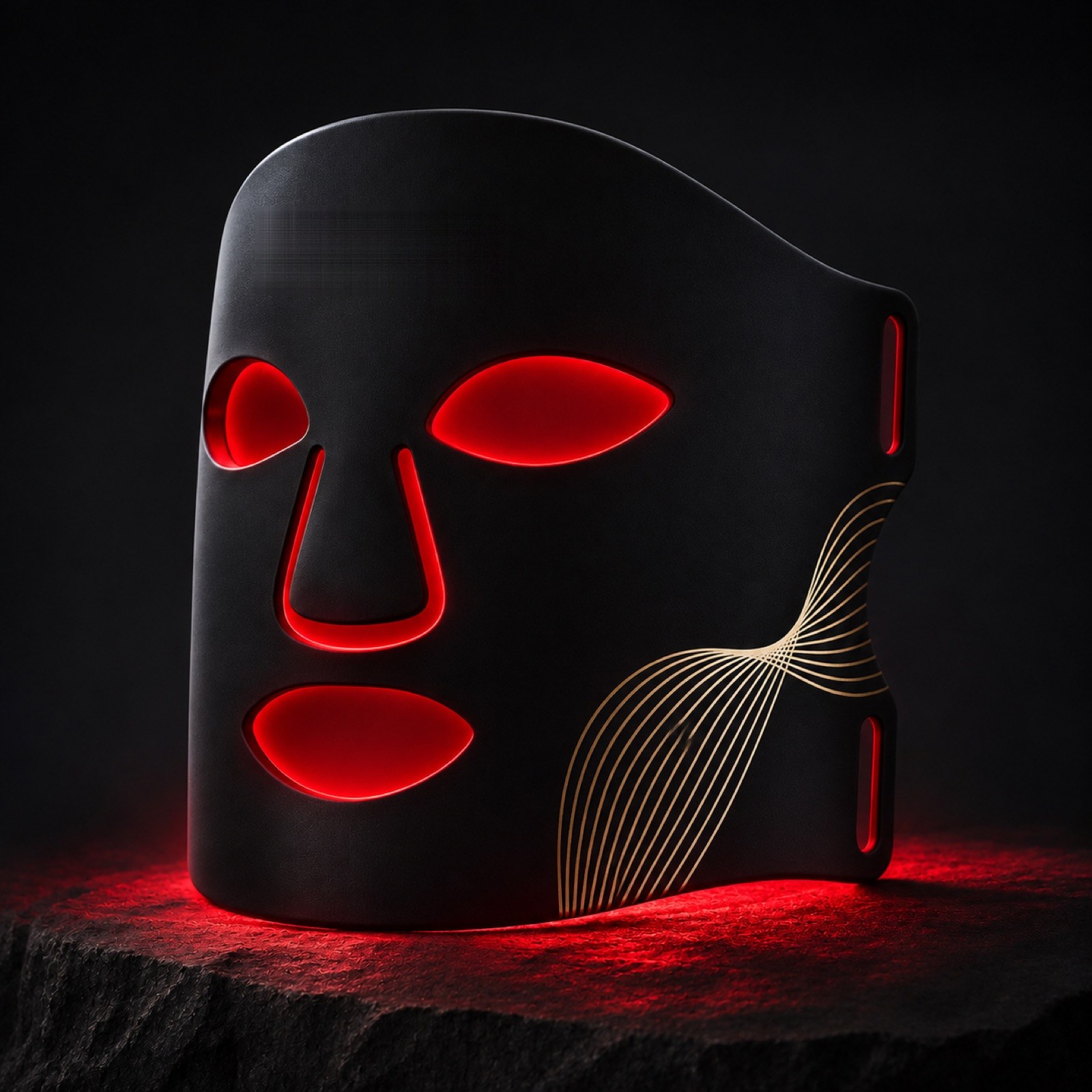
- Anything at 630 nm, the Red Mask's red wavelength. The trial used 660 nm.
- Better skin hydration or elasticity. Neither improved.
- Whether results last after sessions stop.
The trial, not our unit
This study tested a method with the researchers' own equipment. It did not test any OUTWILL product. Each product page sets what the trial used beside what you get, and marks where they differ.
On our shelf
Read next
Method
Red light on skinHow often should you use a red light mask?Reviewed November 17, 2026Study
Red and broad-spectrum light on skin: a 2014 controlled trialDoes red light therapy work for wrinkles?Reviewed November 17, 2026Guide
How to use a red light maskHow often should you use a red light mask?Reviewed November 17, 2026Guide
How to choose a red light maskWhat should you look for in a red light mask?Reviewed November 17, 2026Sources
Corrections
See something wrong, or a study we read differently than you? Write to hello@outwill.shop. A person checks it, corrects the page and updates the review date. How we grade and review.