How to choose
How to choose a red light mask
The question: What should you look for in a red light mask?
Check the red wavelength (trials used roughly 611 to 660 nm), the power output in mW/cm², and the dose per session in J/cm². Most masks state the first and skip the other two, and without them you can't compare a mask with the trials.
The numbers that matter
- Wavelength (nm)
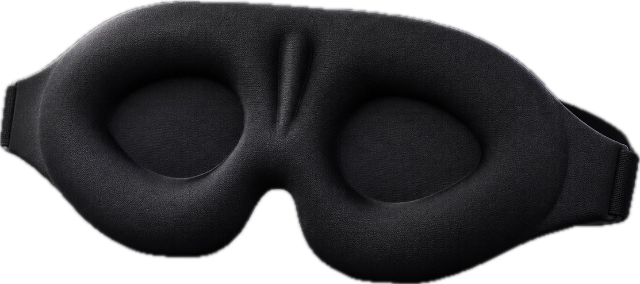
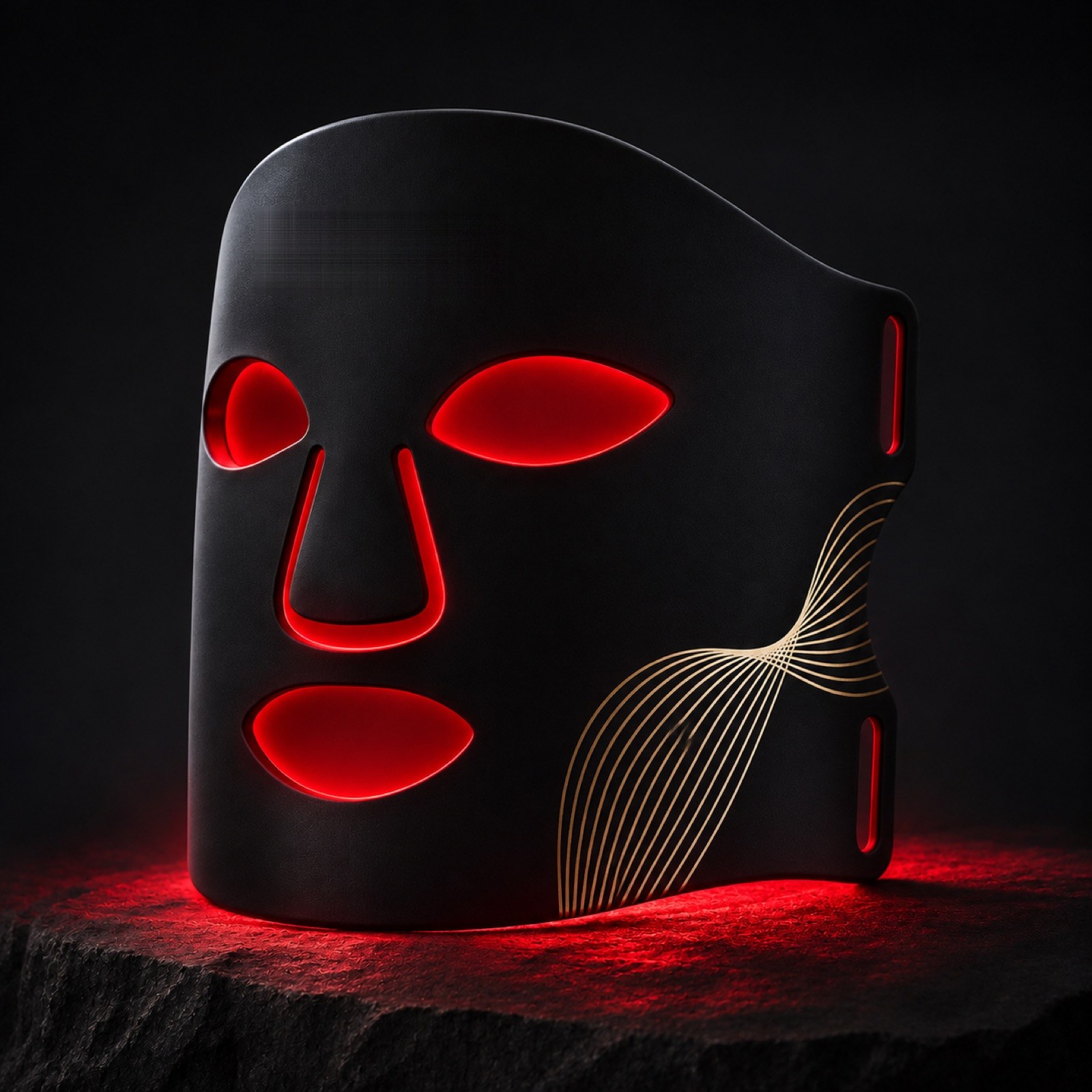
- Red light trials used around 611 to 660 nm: 611 to 650 nm in a 2014 trial, 660 nm in a 2025 trial, 630 plus 850 nm in a 2026 maker-run mask study. Red Mask: 630 nm.
- Irradiance (mW/cm²)
- The power reaching your skin. The 2025 sham-controlled mask trial measured 6.4 mW/cm². The AAD says at-home devices are less powerful than what dermatologists use. Red Mask: not stated in our listing; to be measured.
- Dose per session (J/cm²)
- Irradiance multiplied by time: 6.4 mW/cm² for 21 minutes is about 8 J/cm², the 2025 trial's dose; the 2014 trial normalised to about 9 J/cm². Red Mask: 10-minute session; dose unknown until irradiance is measured.
- Sessions per week
- Two sessions a week did as well as three in the 2025 trial; Harvard Health says home devices need use multiple times a week for four to six months.
- LED count
- We found no study linking the number of LEDs to results. Red Mask: 70 LEDs.
- Extra colours
- Many masks add blue or green. The trials we cite for the Red Mask used red. Red Mask: red, blue and green modes.
- Eye protection
- The AAD says to use the eye protection the directions recommend, never sunglasses in its place. Red Mask: use with eyes closed.
- 'FDA cleared'
- The AAD says FDA clearance doesn't tell you anything about how effective a device is. Our listing makes no clearance claim.
Reading a listing
A wavelength with no irradiance is half a spec. If a maker states mW/cm² and session minutes, you can work out the dose and compare it with the trials. If it doesn't, you can't, and that includes our mask until we publish a measurement.
See a dermatologist first if
Your skin is darker (the AAD says darker skin tones are more sensitive to visible light), you have a light-sensitive condition such as lupus, or you take light-sensitive medication such as certain antibiotics (Harvard Health).
On our shelf
Read next
Method
Red light on skinHow often should you use a red light mask?Reviewed November 17, 2026Study
Red and broad-spectrum light on skin: a 2014 controlled trialDoes red light therapy work for wrinkles?Reviewed November 17, 2026Study
Red and amber light on crow's feet: a 2023 split-face trialDoes red light reduce wrinkles around the eyes?Reviewed November 17, 2026Guide
How to use a red light maskHow often should you use a red light mask?Reviewed November 17, 2026Guide
How to use a light therapy lampWhat time should you use a light therapy lamp, and for how long?Reviewed November 17, 2026Guide
How to use a walking pad at your deskWhat speed should a walking pad be for desk work?Reviewed November 17, 2026Sources
- Wunsch and Matuschka, Photomed Laser Surg 2014: red and near-infrared light, 136 volunteers (PubMed abstract)
- Bragato et al., Lasers Med Sci 2025: red LED mask, two vs three sessions a week, sham-controlled, 95 women (PubMed abstract)
- Bellanger et al., Skin Res Technol 2026: home-use 630/850 nm LED mask plus cream, 50 women, maker-employed authors (PubMed abstract)
- American Academy of Dermatology: Is red light therapy right for your skin?
- Harvard Health Publishing: Red light therapy for skin care
- Das et al., Aesthetic Plast Surg 2026: systematic review of at-home LED devices for the face, 8 studies (PubMed abstract)
Corrections
See something wrong, or a study we read differently than you? Write to hello@outwill.shop. A person checks it, corrects the page and updates the review date. How we grade and review.