
Study · Photomedicine and Laser Surgery, 2014
Red and broad-spectrum light on skin: a 2014 controlled trial
The question: Does red light therapy work for wrinkles?
In a sponsor-funded trial of 136 volunteers, 30 sessions of red or broad-spectrum light led to better blinded wrinkle ratings and collagen scores than no treatment. The untreated group was not randomized, and the light came from lamp units, mostly full-body, not a face mask.
The paper
Wunsch A, Matuschka K (2014). A controlled trial to determine the efficacy of red and near-infrared light treatment in patient satisfaction, reduction of fine lines, wrinkles, skin roughness, and intradermal collagen density increase. Photomedicine and Laser Surgery.
Read it at the source · DOI 10.1089/pho.2013.3616 · PubMed
We read the full paper.
Who was studied, and how
- Design
- Prospective controlled trial run in 2012. Four light groups were assigned by computer randomization. The untreated control group was recruited mainly from the sponsor's employees, without randomization.
- Participants
- 136 enrolled; 128 completed (57 red light, 48 broad-spectrum light, 23 untreated controls)
- Population
- Adults aged 27 to 79 in Germany, mostly women. Excluded: photosensitivity or photosensitising medication, prior or current skin cancer, recent cosmetic procedures, pregnancy or breastfeeding, epilepsy.
What the trial used
- Wavelength
- 611–650 nm (red lamps) or 570–850 nm (broad-spectrum lamps)
- Light source
- Low- or mid-pressure gas discharge lamps; three of the four units were full-body
- Irradiance, 611–650 nm
- 5.9–13.3 mW/cm²
- Dose per session, 611–650 nm
- 8.5–9.6 J/cm²
- Session
- 12–25 minutes, depending on the unit
- Frequency
- Twice a week, 30 sessions
- Measured
- At baseline, after 15 and 30 sessions, and 6 months later
What it found
Self-rated complexion and skin feeling (light groups only), skin roughness by profilometry, collagen density by ultrasound, and blinded expert ordering of before and after photos.
- Effect, as reported
- Blinded raters judged wrinkles better in 69% (red) and 75% (broad-spectrum) of treated people vs 4% of controls; 74% of controls were rated worse. Collagen intensity score rose 5.75 (red) and 6.40 (broad-spectrum) vs −0.26 in controls (p<0.001). Red and broad-spectrum light did not differ.
Limitations
- Fully funded by the sponsor, which supplied all lamps and measuring equipment; the lead investigator was paid by the sponsor.
- The control group was not randomized and was drawn mostly from the sponsor's staff.
- No sham light. The authors say a sham light source most likely does not exist.
- Controls got worse over the study (winter into summer), which widens the gap. The authors suggest sun exposure.
- Self-rated outcomes were not collected from controls.
- Only 77 people attended the 6-month follow-up.
Funding and conflicts
Fully funded by JK-Holding GmbH (Windhagen, Germany), which provided all materials, light sources and evaluation equipment. The principal investigator was mandated and paid by the sponsor.
What it does not show
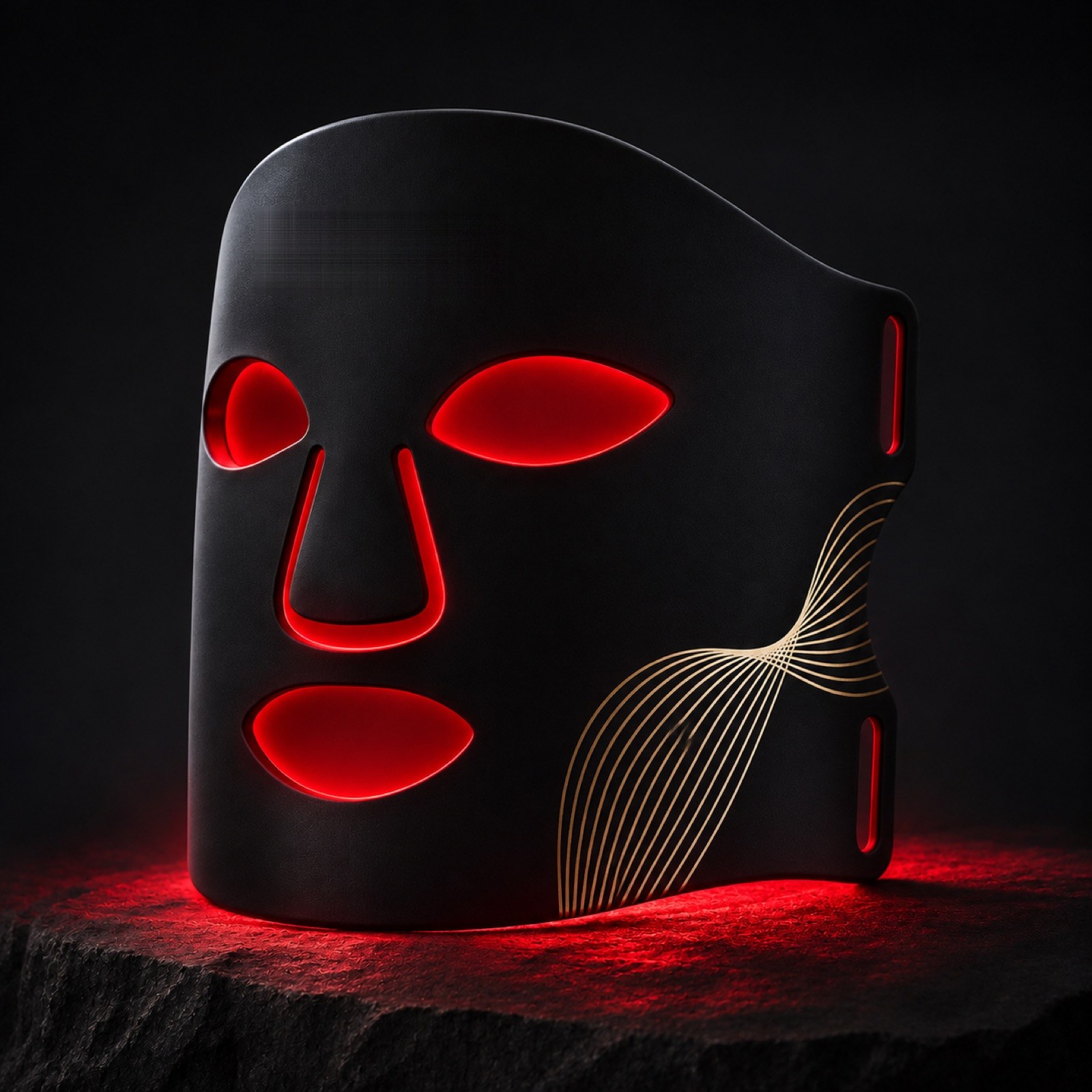
- That an LED face mask works. The trial used gas discharge lamp units, mostly full-body.
- That the Red Mask delivers the same dose. Its irradiance has not yet been measured.
- A randomized comparison with untreated people.
- Anything about acne or other skin conditions.
The trial, not our unit
This study tested a method with the researchers' own equipment. It did not test any OUTWILL product. Each product page sets what the trial used beside what you get, and marks where they differ.
On our shelf
Read next
Method
Red light on skinHow often should you use a red light mask?Reviewed November 17, 2026Study
Red and amber light on crow's feet: a 2023 split-face trialDoes red light reduce wrinkles around the eyes?Reviewed November 17, 2026Guide
How to use a red light maskHow often should you use a red light mask?Reviewed November 17, 2026Guide
How to choose a red light maskWhat should you look for in a red light mask?Reviewed November 17, 2026Sources
Corrections
See something wrong, or a study we read differently than you? Write to hello@outwill.shop. A person checks it, corrects the page and updates the review date. How we grade and review.