Glossary
The words on our pages, in plain words.
Units, wavelengths and study designs, each with what it means when you read a product page or a listing.
Circadian rhythm
The body's roughly 24-hour cycle of physical, mental and behaviour changes. It is mostly set by light and darkness and affects sleep, body temperature, hormones and appetite. It is sometimes called the body clock.
Cohort study
A study that follows groups of people who are alike in many ways but differ in one characteristic, such as how many steps they take, and compares an outcome between them. It is observational: nobody is assigned a treatment.
Because cohort data are observational, the 2022 steps meta-analysis states that causal inferences cannot be made.
Crossover trial
A trial in which every participant gets each of the options being compared, in an order set at random, usually with a rest period in between. Each person is compared with themselves.
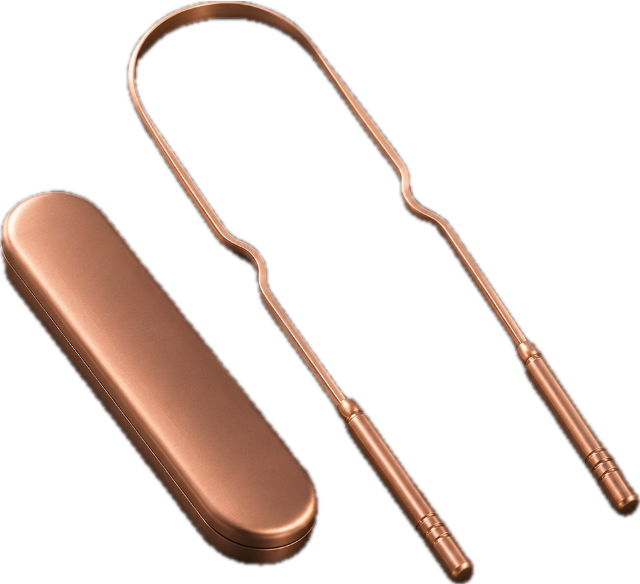
The 2004 tongue scraper trial and the 2023 eye mask study used this design.
Dim light melatonin onset (DLMO)
The clock time when evening melatonin, measured in dim light, rises past a set threshold. Gooley 2011 used 25% of the fitted peak-to-trough amplitude.
Room light before bed pushed melatonin onset later in 103 of 104 people in that study.
Hazard ratio
How often an event, such as death, happens in one group compared with another over time. A hazard ratio of 1 means no difference; below 1 means the event happened less often in the first group.
In the steps meta-analysis, the top quartile had a hazard ratio of 0.47 against the bottom quartile.
Irradiance
The power of light landing on an area, often given in milliwatts per square centimetre (mW/cm²). The watt is the SI unit of power and radiant flux. Two devices with the same wavelength can deliver very different irradiance.
The 2014 skin trial reported 5.9 to 13.3 mW/cm² in the 611–650 nm band, depending on the lamp unit.
Light dose (fluence, J/cm²)
Irradiance multiplied by time, given in joules per square centimetre. It is how trials compare sessions of different strength and length.
In the 2014 skin trial, 7.1 mW/cm² for 20 minutes gave 8.5 J/cm². The 2023 split-face trial used 3.8 J/cm² per session.
Lux
The unit of illuminance: how much visible light lands on a surface. One lux is one lumen per square metre. A lamp's lux figure only means something with the distance it was measured at.
In the 2011 melatonin study, ordinary room light was under 200 lux and dim light under 3 lux. Most bright light trials used 10,000 lux.
Melatonin
A hormone made by the pineal gland, a tiny organ near the centre of the brain. It is released at night, acts as the body's internal signal of darkness and helps control the sleep cycle.
Meta-analysis
A method that analyses data from several studies on the same question together. The pooled result is usually stronger than any single study's.
Nanometre (nm) and wavelength
A nanometre is one billionth of a metre. Wavelengths of light are measured in nanometres, and the wavelength sets the colour.
Studies name colours by wavelength: the 2001 melatonin study found 446–477 nm (blue) most potent, and the red light skin trials used 611–660 nm.
Odds ratio
The odds of an event in one group compared with the odds in another. An odds ratio of 1 means the same odds; above 1 means higher odds in the first group.
In the bright light meta-analysis, the odds ratio for remission was 2.42 in favour of bright light.
Photobiomodulation (PBM)
Changing how cells work with low-level, non-heating light from LEDs, lasers or lamps. It is also called low-level light therapy (LLLT).
Placebo and sham
An inactive substance or procedure that looks and is given like the real one, so its effects can be compared. A sham is a fake version of a device or procedure.
Light is hard to fake. Bright light trials used dim red light or a negative ion generator as a sham, and the 2014 skin trial used no sham, its authors arguing that a sham light without any effect most likely does not exist.
Plaque index
A score for how much plaque covers the teeth, recorded by an examiner using a named scale.
Goyal 2013 used the Rustogi Modification of the Navy Plaque Index. Most trials in the 2019 Cochrane review used the Quigley-Hein index, scored 0 to 5. Gum inflammation is scored separately, most often with the Löe-Silness gingival index (0 to 3).
Randomized controlled trial (RCT)
A study in which participants are divided by chance into groups that get different treatments or comparisons. Using chance makes the groups similar, so the effects can be compared more fairly.
Split-face trial
A trial in which each person gets one treatment on one side of the face and a different one, or none, on the other side, with the side chosen at random. Each person serves as their own comparison.
In the 2023 red and amber light trial both sides were treated, so there was no untreated side to compare against.
Volatile sulfur compounds (VSCs)
Sulfur gases, mainly hydrogen sulfide and mercaptans, that are the main components of bad breath. Studies measure them with a handheld sulfide monitor.
Trials also use an organoleptic test, in which a trained person, often a dentist, scores breath by smell.
Corrections
See something wrong, or a study we read differently than you? Write to hello@outwill.shop. A person checks it, corrects the page and updates the review date. How we grade and review.