
How to use
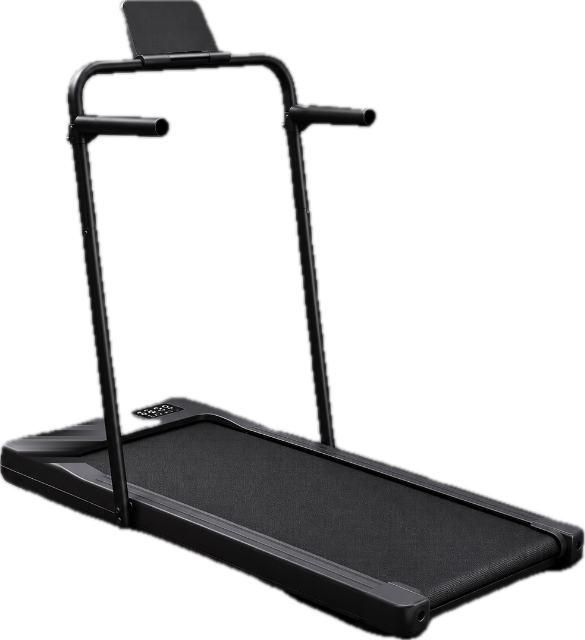
How to use a walking pad at your desk
The question: What speed should a walking pad be for desk work?
About 1 to 1.5 mph while you type. In a 2012 study, typing at about 1.4 mph was no different from typing seated, while about 2 mph was worse; office workers in another study chose about 1.1 mph on their own. Go faster for calls and reading.
Step by step
Start short and slow
Cleveland Clinic advises starting with short periods at a slow pace and working up to longer intervals and faster speeds. The Desk Walker starts at 0.6 mph.
Type at about 1 to 1.5 mph
Typing at 2.25 km/h (about 1.4 mph) matched seated typing in a 2012 study of 24 people; 3.2 km/h (about 2 mph) and 1.3 km/h were worse. Office workers given a walk-and-work desk chose about 1.1 mph.
Speed up for calls and reading
In a 2009 study, walking lowered typing, mouse and maths scores by 6 to 11% but did not affect attention or reading comprehension. Save the faster pace for calls, reading and thinking.
Wear walking shoes and clip in the safety key
Cleveland Clinic says office shoes are rarely supportive and long barefoot walks can cause overuse injuries. The Desk Walker comes with a safety key and remote.
Count steps with a device on your hip, thigh or ankle
At slow treadmill speeds (0.5 to 2 mph), step counters averaged about 40% error in a 2022 study of 21 devices; wrist-worn ones were the least accurate. A phone in your pocket or a clip-on counter is a better bet than a watch.
Common mistakes
- Typing at 2 mph or more on day one. Typing gets worse at faster speeds.
- Trusting a wrist tracker at desk speeds. Accuracy drops at slow walking speeds, and wrist devices were the least accurate.
- Doing two hours straight on day one. Build up.
- Walking barefoot or in dress shoes for long stretches.
The free version
No walker yet? Walk after lunch and after dinner, and count the steps on your phone. The research tracks daily steps; aim to add 2,000 a day to your current average first.
How many steps are worth it
A 2022 meta-analysis of 15 cohorts and 47,471 adults found that more steps per day went with a progressively lower risk of death, levelling off around 6,000 to 8,000 a day for adults 60 and older and 8,000 to 10,000 for younger adults. It is an association, not a trial.
Talk to your doctor first if
The American Academy of Family Physicians says to check with your doctor before starting if you are over 50 and not used to exercise, and to talk to your doctor if you get chest pain, trouble breathing, light-headedness or dizziness, or difficulty with balance while exercising. Cleveland Clinic says walking pads suit able-bodied people with good balance; most have no handrails.
On our shelf
Read next
Method
Daily stepsHow many steps a day do you need?Reviewed November 17, 2026Study
Daily steps and risk of death: a 2022 meta-analysis of 15 cohortsWhat did the 2022 Lancet meta-analysis of daily steps find?Reviewed November 17, 2026Guide
How to choose a walking padWhat should you look for in a walking pad for a desk?Reviewed November 17, 2026Comparison
Walking pad vs treadmillShould you get a walking pad or a treadmill?Reviewed November 17, 2026Guide
How to use a light therapy lampWhat time should you use a light therapy lamp, and for how long?Reviewed November 17, 2026Guide
How to use a red light maskHow often should you use a red light mask?Reviewed November 17, 2026Sources
- Funk et al., Percept Mot Skills 2012: treadmill walking speed and typing, 24 people (PubMed abstract)
- Levine and Miller, Br J Sports Med 2007: walk-and-work desk, self-selected speed, 15 office workers (PubMed abstract)
- John et al., J Phys Act Health 2009: treadmill workstation and office tasks, 20 people (PubMed abstract)
- Cleveland Clinic: Are walking pads worth it?
- Mora-Gonzalez et al., Int J Behav Nutr Phys Act 2022: accuracy of 21 step counters across treadmill speeds, 258 adults (PubMed abstract)
- Paluch et al., Lancet Public Health 2022: daily steps and mortality, 15 cohorts, 47,471 adults
- American Academy of Family Physicians, familydoctor.org: Exercise and seniors
Corrections
See something wrong, or a study we read differently than you? Write to hello@outwill.shop. A person checks it, corrects the page and updates the review date. How we grade and review.