Water flosser vs String floss
Water flosser vs string floss
The question: Is a water flosser better than string floss?
For most people they come out about even: the best independent single-use trial found no difference in plaque removed. A water flosser is the easier pick with braces, bridges or other dental work, or if floss is hard to handle; string floss needs no water, power or charging.
Side by side
| Compared on | Water flosser | String floss |
|---|---|---|
| How it cleans | A stream of water along the gumline and between teeth | A thread worked against the sides of each tooth |
| Plaque, one use, independent trial (83 people, split mouth) | 87% reduction (cordless unit) | 89% reduction; no significant difference |
| Plaque, one use, trial of one maker's countertop unit (70 people) | 74% whole-mouth reduction | 58%; the paper reports the water flosser as 29% more effective |
| Gum inflammation over weeks (Cochrane, 2019) | May reduce gingivitis at one month compared with floss; low to very low certainty; no plaque difference | Adding floss to brushing may reduce gingivitis; low certainty |
| Number of trials in that review (vs brushing alone) | 5 | 15 |
| Braces, bridges, other dental work | ADA: may help people reach every nook and cranny | Not singled out by the ADA for dental work |
| Needs | Water, a sink, and a charge or an outlet | Nothing |
| ADA advice | An option if other ways of cleaning between teeth are hard to use | Clean between teeth once a day |
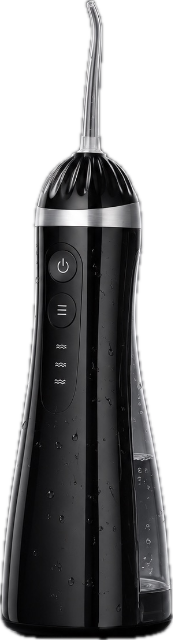
| Our option | Jet, $49, cordless, rechargeable, IPX7 | We don't sell it |
Where water flosser wins
- Braces, bridges and other dental work: the ADA says a water flosser may help you reach every nook and cranny.
- If you lack the dexterity for floss: the independent 2021 trial's authors recommend water flossers for people lacking manual dexterity and for people with fixed dental work or braces.
- In the one trial run with a maker's countertop unit, it removed more plaque than floss after a single use.
Where string floss wins
- It has more research behind it: 15 trials of floss against brushing alone in the 2019 Cochrane review, against 5 for water flossers.
- In the independent single-use trial, floss came out slightly ahead in raw numbers (89% vs 87% plaque reduction), though the gap was not significant.
- It needs no water, power, charging or sink, so it goes anywhere.
What the trials found
Two single-use trials point different ways. A 2013 trial of 70 adults, run with one maker's countertop water flosser filled with 500 ml of warm water, reported 74% whole-mouth plaque reduction against 58% for floss, which the authors describe as 29% more effective. A 2021 trial of 83 people, run independently with a cordless unit on one side of the mouth and floss on the other, found 87% and 89%: no significant difference. One use is not the same as months of use, and both trials measured plaque, not gum health.
What a review of longer trials says
The 2019 Cochrane review pooled 35 trials of cleaning between teeth, each at least four weeks long. Water flossers may reduce gum inflammation at one month compared with floss, but the certainty is low to very low and there was no difference in plaque. Floss added to brushing may reduce gingivitis compared with brushing alone, also with low certainty. Interdental brushes did best of all: they may reduce gingivitis more than floss. The authors note that most effects were short term and may not be clinically important.
We cite the bigger number on our own page
Our Jet page cites the 29% figure from the 2013 trial. Read it with the 2021 result next to it: an independent trial with a cordless unit, closer to the Jet than the 2013 countertop unit, found the two methods equal. The honest summary is 'at least as good as floss for most people', not 'better'.
What matters more than the method
The ADA recommends cleaning between your teeth once a day and says products with its Seal of Acceptance have been shown safe and effective. Pick the method you will use every day, and ask your dentist which fits your mouth, especially with implants, bridges or braces.
On our shelf
Read next
Comparison
Copper vs stainless steel tongue scraperIs a copper or stainless steel tongue scraper better?Reviewed November 17, 2026Comparison
Stainless steel vs jade gua shaIs a stainless steel or jade gua sha better?Reviewed November 17, 2026Comparison
Walking pad vs treadmillShould you get a walking pad or a treadmill?Reviewed November 17, 2026Comparison
Red vs amber night light for sleepIs a red or amber night light better for sleep?Reviewed November 17, 2026Comparison
Light therapy lamp vs sunrise alarm clockIs a light therapy lamp or a sunrise alarm clock better?Reviewed November 17, 2026Comparison
Light therapy lamp vs going outsideIs a light therapy lamp as good as going outside?Reviewed November 17, 2026Sources
- Goyal et al., J Clin Dent 2013: water flosser vs string floss, single use, 70 adults (PubMed abstract)
- Abdellatif et al., Saudi Dent J 2021: cordless water flosser vs floss, 83 people (PubMed abstract)
- Worthington et al., Cochrane Review 2019: home interdental cleaning devices, 35 trials (PubMed abstract)
- American Dental Association, MouthHealthy: Flossing
Corrections
See something wrong, or a study we read differently than you? Write to hello@outwill.shop. A person checks it, corrects the page and updates the review date. How we grade and review.