Red vs Amber
Red vs amber night light for sleep
The question: Is a red or amber night light better for sleep?
Red, in theory, if you want the least effect on your body clock: the clock's light sensor is most sensitive near 480 nm, and deep red is furthest from that. Amber lets you see colours better. No study we read cleanly separates the two, and how dim the light is matters as much as its colour.
Side by side
| Compared on | Red | Amber |
|---|---|---|
| Typical wavelength | Ours: 670 nm | Around 595 nm (the amber light in a 2001 trial) |
| Distance from the clock sensor's peak (about 480 nm) | Far | Closer |
| Melatonin | Bright 631 nm red for 6 hours did not suppress melatonin (24 people) | Tested alongside red in a 2001 trial; the abstract reports the most suppression at 470 to 525 nm and gives no separate amber figure |
| Body clock | The same red light still delayed the clock by almost an hour on average, through cone cells | Not separately reported in what we read |
| Alertness at night | Red light at 40 lux raised brain-wave and heart-rate markers of alertness (14 people) | No study read |
| Seeing colours | Light stripped of short wavelengths reduces colour discrimination (2022 consensus) | Likely keeps more colour than deep red; we found no measurement |
| Brightness target, last 3 hours before bed | Under 10 melanopic lux at the eye (2022 consensus) | Same |
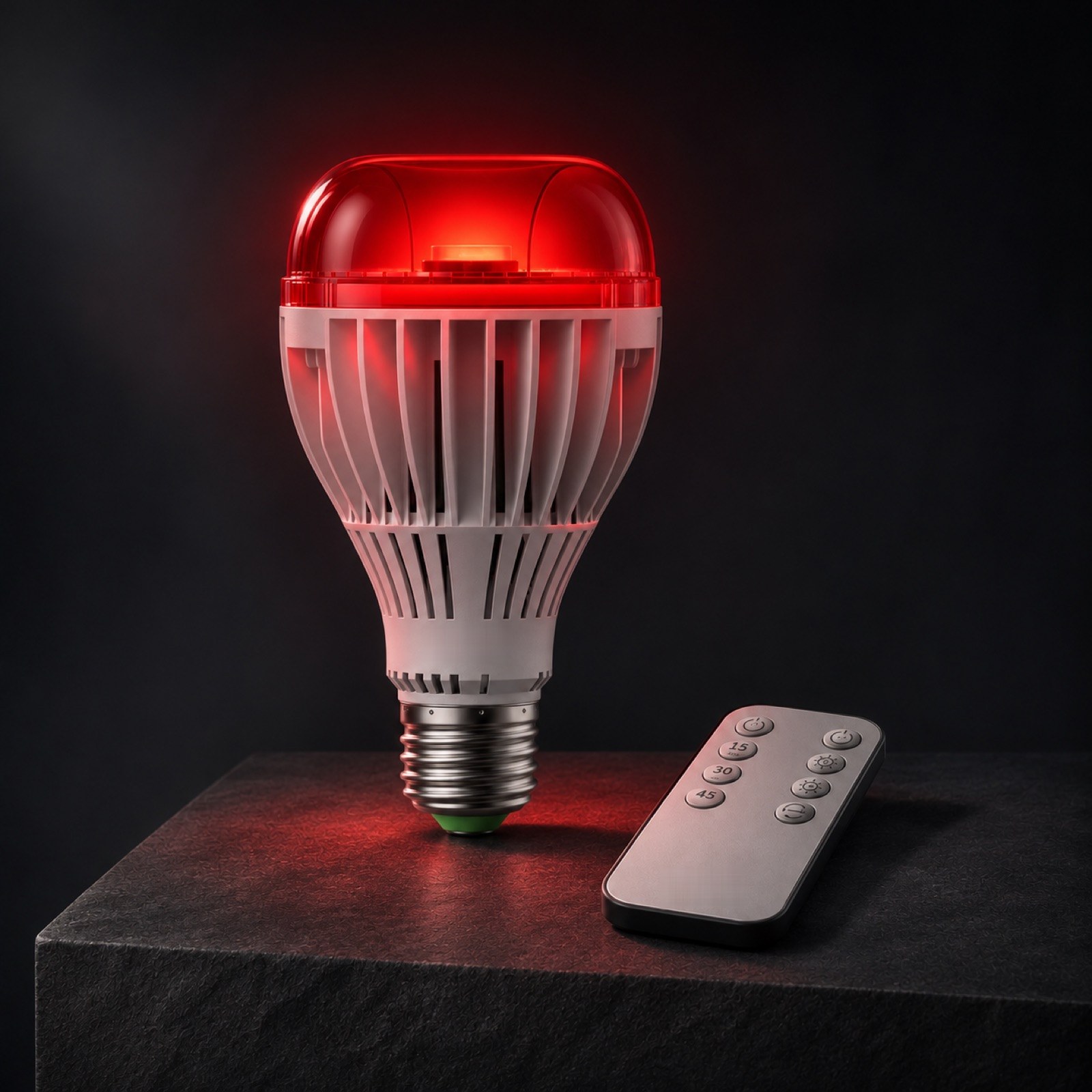
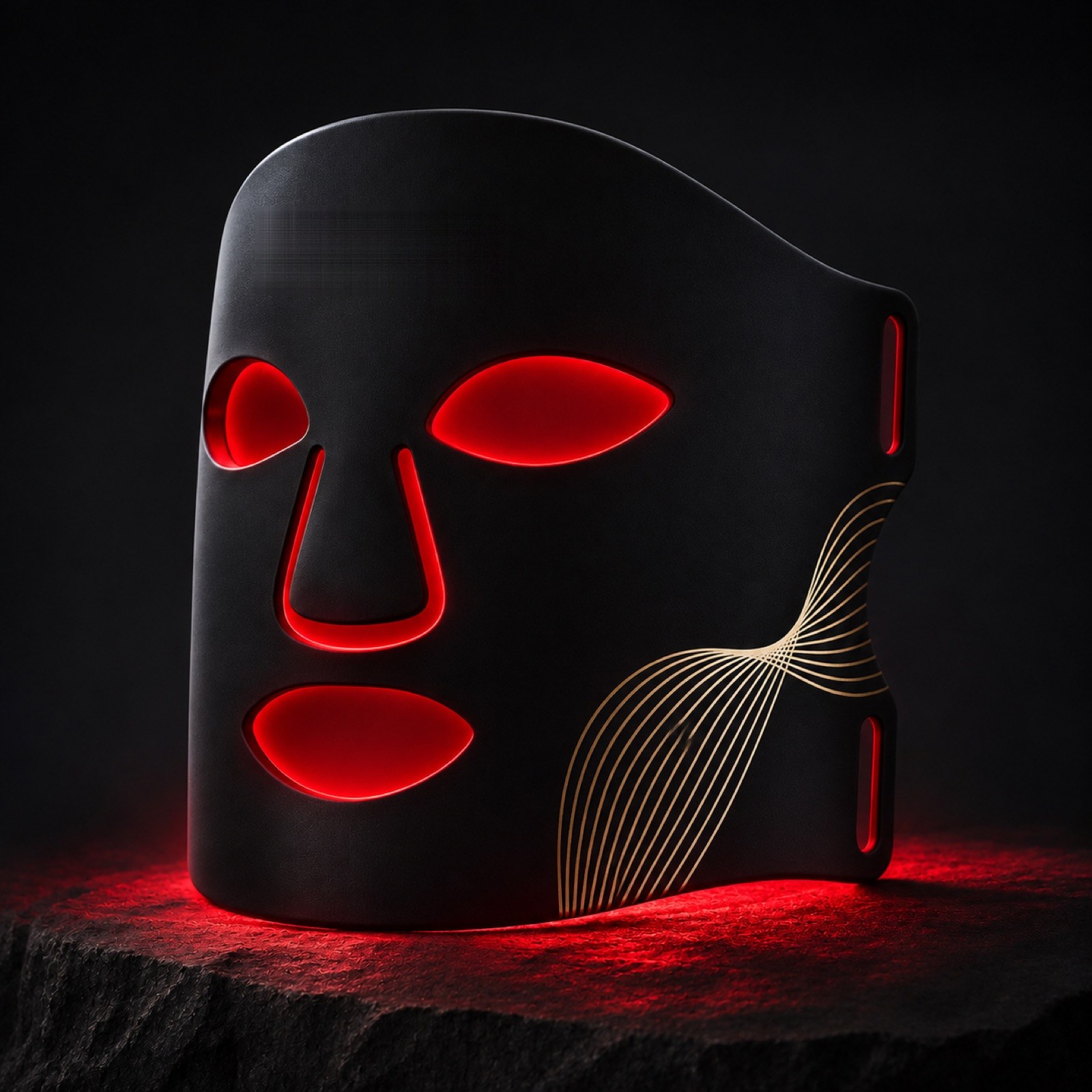
| Our option | Red Night Bulb, $139, 670 nm, dimmable, E26 | We don't sell one |
Where red wins
- It sits furthest from the wavelengths the clock is most sensitive to; researchers describe the circadian system as quite insensitive to red light.
- Even bright red light for six hours did not suppress melatonin in a 2014 lab study.
Where amber wins
- Seeing: the 2022 expert consensus notes that light engineered to minimise its effect on the clock comes at the cost of colour discrimination. Amber gives up less of it.
- If your evening light is already dim, colour matters less. The consensus target is under 10 melanopic lux at the eye, which a dim, warm amber lamp can meet.
What the body clock responds to
The light sensor behind the body clock, melanopsin, is most sensitive near 480 nm, in the blue. In a 2001 trial comparing 660 nm red, 595 nm amber, 525 nm green, 497 nm and 470 nm light at equal power, the three shortest wavelengths suppressed melatonin by 65 to 81% and delayed its onset the next night by 27 to 36 minutes. The abstract does not give separate figures for amber and red, so we can't say from it how far apart they are.
Red is not invisible to your body
In a 2014 lab study, six hours of bright 631 nm red light did not suppress melatonin, but it still delayed the body clock by almost an hour on average, and two people responded as strongly as to bright white light. In a 2009 study, red light at 40 lux raised brain-wave and heart-rate markers of alertness at night. Red is a better colour for the evening, not a free pass.
Dim matters as much as colour
Ordinary room light (under 200 lux) in the hours before bed delayed melatonin onset in 99% of people and shortened melatonin by about 90 minutes, compared with dim light under 3 lux, in a 2011 analysis of 116 adults. The 2022 expert consensus recommends under 10 melanopic lux at the eye for at least 3 hours before bed and under 1 during sleep. Whatever colour you choose, keep it low and turn it off when you sleep.
On our shelf
Read next
Comparison
Copper vs stainless steel tongue scraperIs a copper or stainless steel tongue scraper better?Reviewed November 17, 2026Comparison
Water flosser vs string flossIs a water flosser better than string floss?Reviewed November 17, 2026Comparison
Stainless steel vs jade gua shaIs a stainless steel or jade gua sha better?Reviewed November 17, 2026Comparison
Walking pad vs treadmillShould you get a walking pad or a treadmill?Reviewed November 17, 2026Comparison
Light therapy lamp vs sunrise alarm clockIs a light therapy lamp or a sunrise alarm clock better?Reviewed November 17, 2026Comparison
Light therapy lamp vs going outsideIs a light therapy lamp as good as going outside?Reviewed November 17, 2026Sources
- Brown et al., PLoS Biol 2022: expert consensus recommendations for daytime, evening and night light (full text)
- Wright and Lack, Chronobiol Int 2001: 660, 595, 525, 497 and 470 nm light vs melatonin, 15 people (PubMed abstract)
- Ho Mien et al., PLoS One 2014: continuous vs intermittent red light, 24 people (PubMed abstract)
- Figueiro et al., BMC Neurosci 2009: blue and red light and alertness at night, 14 people (PubMed abstract)
- Gooley et al., J Clin Endocrinol Metab 2011: room light before bed and melatonin, 116 adults (PubMed abstract)
Corrections
See something wrong, or a study we read differently than you? Write to hello@outwill.shop. A person checks it, corrects the page and updates the review date. How we grade and review.