Copper vs Stainless steel
Copper vs stainless steel tongue scraper
The question: Is a copper or stainless steel tongue scraper better?
Neither metal has been shown to clean the tongue better: we found no study that compares them. The evidence is for scraping itself, and it is small, so choose on upkeep and feel. Stainless steel stays bright with no care; copper darkens over time.
Side by side
| Compared on | Copper | Stainless steel |
|---|---|---|
| What it is | Copper metal | Iron with chromium (at least about 10.5%) and nickel |
| Over time | Polished copper gradually tarnishes black; green or blue-green spots mean more serious corrosion | Keeps a silvery-grey colour and does not easily rust |
| Studies comparing the two metals | None found | None found |
| Studies that named this metal | One 2026 study of 13 dental students used a copper scraper and compared it with tongue brushing | None found that named stainless steel in the abstract |
| Germ or health claims | We make none. No study we read tested whether the metal matters | None |
| Upkeep | Rinse and dry after use; expect it to darken and need polishing if you want it bright | Rinse and dry after use |
| What the ADA says about scraping | Personal preference, not a necessary step; no evidence it prevents bad breath | Same: the advice is about scraping, not the metal |
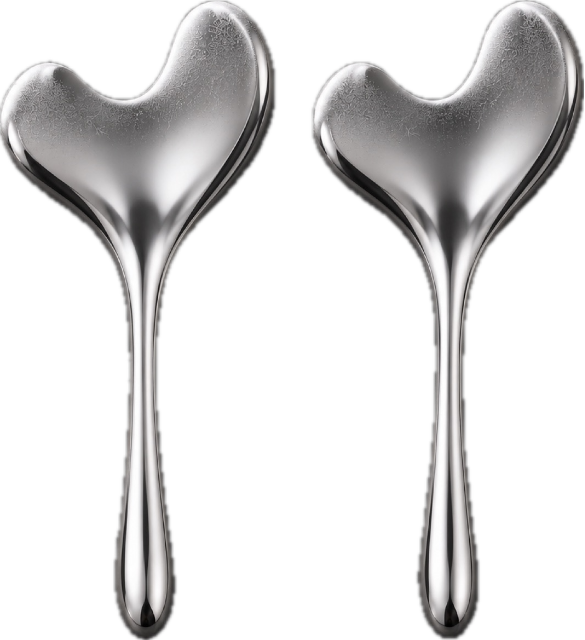
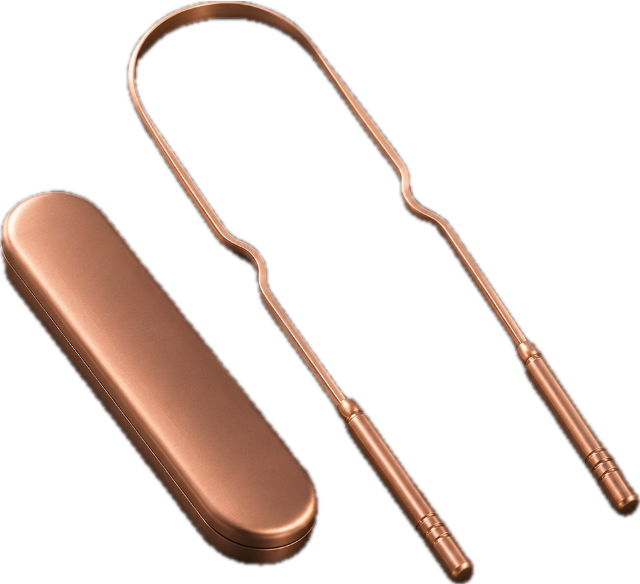
| Our option | Copper Scraper, $29, U-shaped, with a metal travel case | We don't sell one |
Where copper wins
- It is the only one of the two that a published study has actually used: a small 2026 study found lower morning breath readings after copper scraping than after tongue brushing (13 people, fixed order, no steel arm).
- If you like the weight and warm colour of copper and don't mind it darkening, nothing we read says it does a worse job.
Where stainless steel wins
- Less upkeep. Stainless steel does not easily rust and keeps its colour; polished copper gradually tarnishes black.
- If you want a scraper that looks the same in a year with no polishing, steel is the easier choice.
What the research tests: scraping, not metal
The trial most often cited for tongue scraping is small: 10 people in a 2004 crossover study, where a scraper cut odour-causing sulfur compounds by 75% against 45% for a toothbrush. A 2019 Cochrane review of halitosis treatments rated the evidence for mechanical tongue cleaning very uncertain (2 trials, 46 people). The American Dental Association goes further: it says there is no evidence that brushing or scraping the tongue prevents bad breath, that the bacteria grow back as fast as you remove them, and that tongue cleaning is personal preference.
What we found on materials
No trial compared copper with stainless steel. A 2019 trial compared a plastic scraper, a metal scraper and a scraper on the back of a toothbrush: all three reduced tongue coating, and the plastic one cut bacterial load the most. The abstract does not say what the metal one was made of. A 2026 study used a copper scraper, but it compared copper with a toothbrush, not with steel, and ran the toothbrush days first for everyone. So the honest answer is that the metal has not been shown to matter.
How each metal ages
Polished copper gradually tarnishes black from sulfur in the air; green or blue-green corrosion is the more serious kind. Stainless steel resists this because chromium forms a thin film on the surface that repairs itself in air. That film needs at least about 10.5% chromium, and chloride-rich water such as seawater is the main thing that breaks it down.
Comfort may matter more than metal
In a 2016 survey, 50 people used nine different scraper designs for two weeks. Scrapers that felt sharper were rated less comfortable, and the ones people found comfortable were also the ones they rated most effective. No single design feature stood out. Pick a shape you will use every morning.
Why we sell copper anyway
We chose copper for the weight and the look. We don't claim copper does anything steel doesn't, and we don't make germ claims about it. The routine is the point; the metal is a preference.
Read next
Comparison
Water flosser vs string flossIs a water flosser better than string floss?Reviewed November 17, 2026Comparison
Stainless steel vs jade gua shaIs a stainless steel or jade gua sha better?Reviewed November 17, 2026Comparison
Walking pad vs treadmillShould you get a walking pad or a treadmill?Reviewed November 17, 2026Comparison
Red vs amber night light for sleepIs a red or amber night light better for sleep?Reviewed November 17, 2026Comparison
Light therapy lamp vs sunrise alarm clockIs a light therapy lamp or a sunrise alarm clock better?Reviewed November 17, 2026Comparison
Light therapy lamp vs going outsideIs a light therapy lamp as good as going outside?Reviewed November 17, 2026Sources
- Pedrazzi et al., J Periodontol 2004: tongue scraper vs toothbrush, 10 people (PubMed abstract)
- Kumbargere Nagraj et al., Cochrane Review 2019: interventions for managing halitosis
- American Dental Association, MouthHealthy: Tongue scrapers and cleaners
- Dwivedi et al., J Contemp Dent Pract 2019: plastic vs metal tongue cleaners vs brush-back scraper (PubMed abstract)
- de Moraes Melo Neto et al., Prague Med Rep 2026: copper tongue scraper vs toothbrush, 13 students (PubMed abstract)
- Beekmans et al., Int J Dent Hyg 2016: user perception of nine tongue scraper designs, 50 people (PubMed abstract)
- Canadian Conservation Institute: Recognizing metals and their corrosion products
- Outokumpu (stainless steel maker): Corrosion resistance of stainless steel
Corrections
See something wrong, or a study we read differently than you? Write to hello@outwill.shop. A person checks it, corrects the page and updates the review date. How we grade and review.