


Method
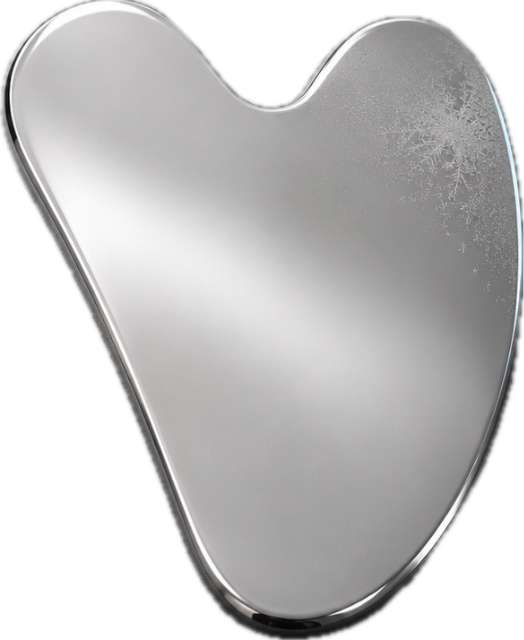
Tongue scraping
The question: Does tongue scraping work?
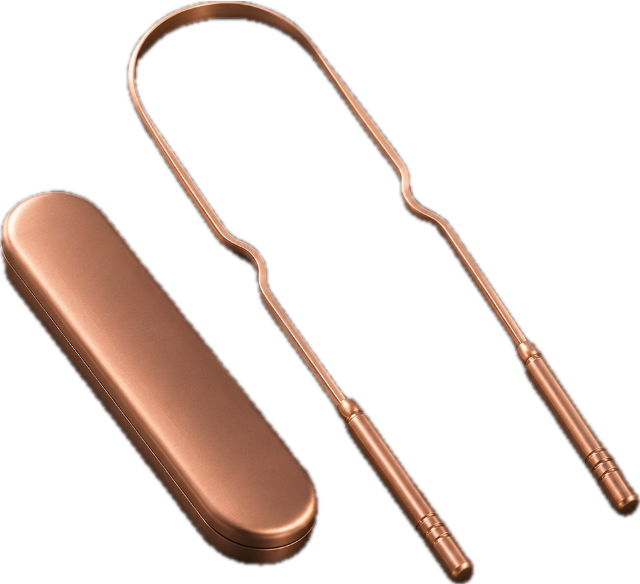
A little, and briefly, as far as the evidence goes. A 10-person trial found a scraper cut sulfur compounds by 75% vs 45% for a toothbrush, but Cochrane reviews rate the evidence for tongue cleaning as weak or very uncertain.
Our grade: Plausible
Built on a well-supported mechanism; the product itself is not trialled.
In support: two small trials (40 people in all, per the 2006 Cochrane review) found scrapers or tongue cleaners lowered sulfur compounds more than toothbrushes. Against: that review called the evidence weak and unreliable, and in one trial the effect could not be detected after 30 minutes. The 2019 Cochrane review, which replaced it, rated tongue cleaning vs none as very uncertain. Copper is a material choice; no study we read compared metals.
A grade describes the research behind a method. It is not a score for a product and not a promise. How we grade.
What the trials used
| Study | Dose | Duration | Result |
|---|---|---|---|
| Pedrazzi V 2004 | Tongue scraper vs soft toothbrush | 1 week each, crossover | Sulfur compounds −75% vs −45% from baseline |
| Kumbargere Nagraj S 2019 | Mechanical tongue cleaning vs none | At least 1 week (2 trials, 46 people) | Dentist-rated smell score 0.20 points lower; very low certainty |
Talk to a doctor first if
- Bad breath or a bad taste that persists can be a sign of gum disease. See your dentist (ADA).
- If your dentist finds no cause in the mouth, see a doctor. Sinus problems, reflux, diabetes, and liver or kidney disease can cause bad breath (ADA).
Still open
- How long the effect lasts through a normal day.
- Whether daily scraping changes breath over months.
- Whether the material (copper, steel or plastic) matters.
The studies, one page each
Study
Tongue scraper vs toothbrush on the tongue: a 2004 crossover trialIs a tongue scraper better than a toothbrush for cleaning the tongue?Reviewed November 17, 2026Study
Ways to manage bad breath: a 2019 Cochrane reviewWhat does the Cochrane review say about tongue cleaning for bad breath?Reviewed November 17, 2026Sources
- Pedrazzi V, Sato S, de Mattos MdG, Lara EH, Panzeri H (2004), Journal of Periodontology
- Kumbargere Nagraj S, Eachempati P, Uma E, Singh VP, Ismail NM, Varghese E (2019), Cochrane Database of Systematic Reviews
- ADA MouthHealthy: Bad breath
- Pedrazzi et al., J Periodontol 2004 (PubMed)
- Outhouse et al., Cochrane 2006, Tongue scraping for treating halitosis (withdrawn 2016, replaced by the 2019 review)
- Kumbargere Nagraj et al., Cochrane 2019 (PubMed)
Corrections
See something wrong, or a study we read differently than you? Write to hello@outwill.shop. A person checks it, corrects the page and updates the review date. How we grade and review.